
Blog
SWPPP Requirements for Lafayette LA Construction
Key Takeaways
- A SWPPP (Storm Water Pollution Prevention Plan) is required in Louisiana for any construction project that disturbs one or more acres of land, under the LPDES construction general permit.
- Louisiana construction sites must obtain coverage through LDEQ before ground is broken, and failure to comply can bring stop-work orders and fines of thousands of dollars per day.
- A SWPPP details the erosion and sediment controls, inspection schedule, and responsible personnel that keep silt and pollutants out of Acadiana's bayous, canals, and storm drains.
- Working with a local civil engineer who knows LDEQ and Lafayette Parish requirements keeps your project compliant and avoids costly construction delays.
What Is a SWPPP and When Is It Required?
A SWPPP, or Storm Water Pollution Prevention Plan, is a site-specific document that describes how a construction project will control erosion and prevent sediment and pollutants from leaving the site in stormwater runoff. In Louisiana, a SWPPP is required for any construction activity that disturbs one acre or more of land — or less than an acre if the site is part of a larger common plan of development.
The requirement comes from the federal Clean Water Act, administered in Louisiana through the Louisiana Pollutant Discharge Elimination System (LPDES). The Louisiana Department of Environmental Quality (LDEQ) issues the Construction General Permit (CGP) that governs stormwater discharges from construction sites. Before you clear, grade, or excavate a qualifying site anywhere in Lafayette Parish or greater Acadiana, you must have permit coverage and a SWPPP in place.
The plan is not a one-time formality. It is a living document that guides how your crew installs, maintains, and inspects erosion controls throughout the life of the project, and it must be updated whenever site conditions change.
Why SWPPP Compliance Matters in South Louisiana
SWPPP compliance protects Acadiana's waterways from sediment pollution, which is the single largest source of construction-related water quality problems. In a region defined by bayous, coulees, and a high water table, uncontrolled runoff from a bare construction site can quickly clog drainage channels, smother aquatic habitat, and contribute to localized flooding.
South Louisiana's flat terrain and heavy, frequent rainfall make erosion control especially challenging. A single afternoon thunderstorm can drop several inches of rain on an exposed site in Lafayette, Broussard, or Youngsville, washing tons of topsoil into the nearest ditch. That sediment does not just harm the environment — it fills the drainage infrastructure that neighboring properties rely on, creating liability for the developer.
Beyond the environmental stakes, non-compliance carries real financial risk. LDEQ inspectors can issue notices of violation, stop-work orders, and penalties that reach into the tens of thousands of dollars. For a developer on a tight construction schedule, a stop-work order is often more damaging than the fine itself.
What a SWPPP Includes
A compliant SWPPP documents both the controls you will use and the procedures for maintaining them. Under the LPDES Construction General Permit, every plan must address a core set of elements before LDEQ will recognize your coverage as valid.
Site and Project Description
The plan begins with a description of the project, including the total site acreage, the area to be disturbed, the sequence of construction activities, and a site map. The map shows drainage patterns, the location of controls, and the receiving waters that runoff will ultimately reach — often a coulee or bayou in the Acadiana region.
Erosion and Sediment Controls
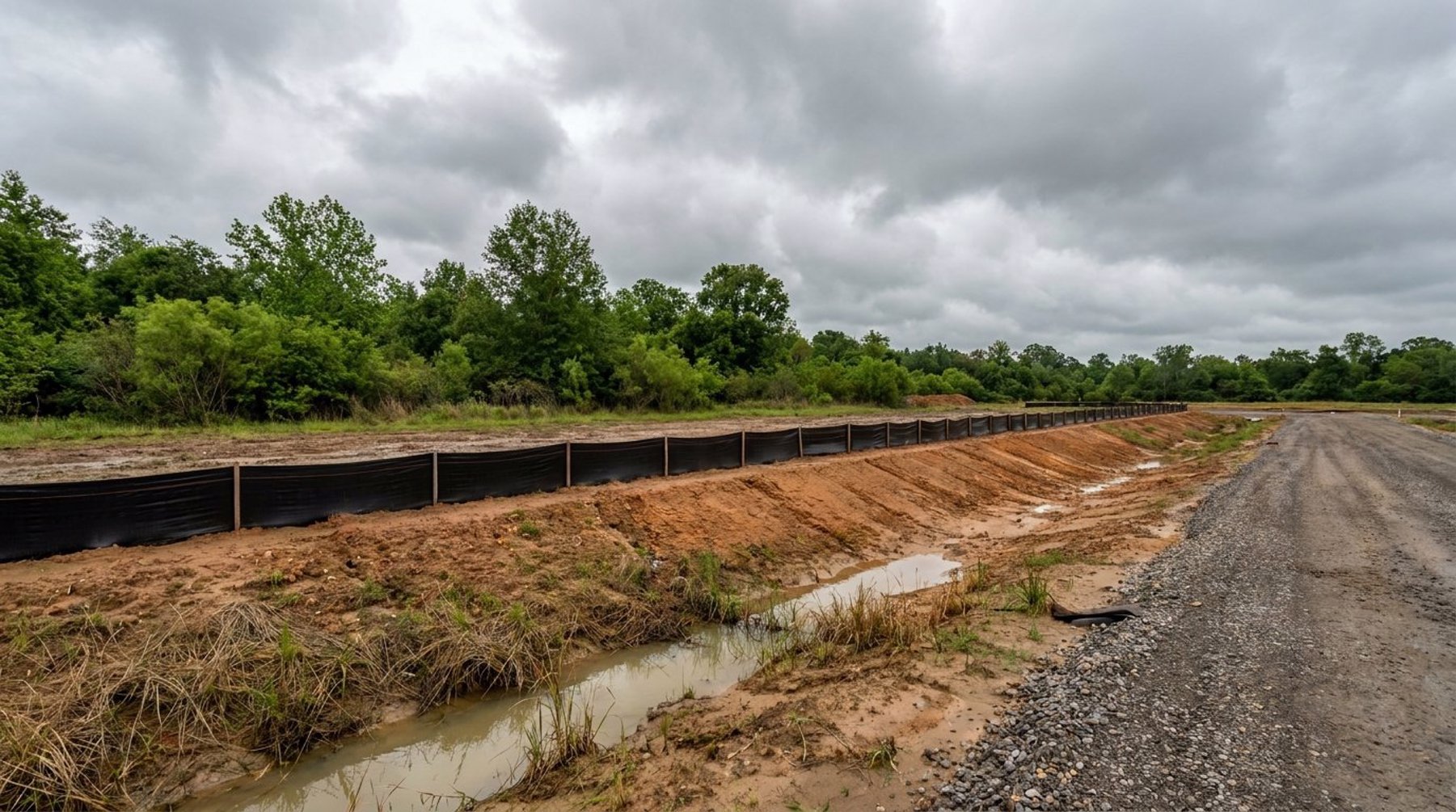
This is the heart of the SWPPP. It specifies the best management practices (BMPs) that will keep soil on site, such as silt fences, inlet protection, stabilized construction entrances, sediment basins, and temporary seeding. The plan explains where each control goes and when it must be installed relative to the grading schedule.
Inspection and Maintenance Procedures
The permit requires routine inspections — typically at least once every seven days and within 24 hours of a rain event of half an inch or more. The SWPPP names the qualified personnel responsible for these inspections and describes how deficiencies will be corrected and documented.
Final Stabilization Plan
Coverage cannot be terminated until the site reaches final stabilization, meaning permanent vegetation or cover protects all disturbed areas. The SWPPP describes how and when stabilization will be achieved and the process for filing a Notice of Termination with LDEQ.
The SWPPP and LPDES Permitting Process
Obtaining SWPPP coverage in Louisiana follows a defined sequence, and skipping a step can delay your entire project. The process generally moves from plan preparation to permit coverage to ongoing field compliance.
First, a civil engineer prepares the SWPPP based on the site's grading and drainage design. Next, the operator submits a Notice of Intent (NOI) to LDEQ to seek coverage under the Construction General Permit. Coverage typically becomes effective after a short waiting period, and construction cannot begin until it is in place. Throughout construction, the operator implements the plan, conducts and logs inspections, and adjusts controls as the site evolves. When work is complete and the site is stabilized, the operator files a Notice of Termination to close out coverage.
Because the SWPPP must reflect the actual grading and drainage plan, it works best when it is developed alongside the rest of your civil engineering package rather than added as an afterthought. Coordinating these documents early prevents conflicts between the erosion-control plan and the site design during construction.
Common SWPPP Compliance Mistakes
The most frequent compliance failures on Lafayette-area sites are not missing paperwork — they are field maintenance lapses that turn a valid plan into a violation. Inspectors look closely at whether the controls on paper actually match what is installed and maintained on the ground.
- Beginning earthwork before coverage is effective. Clearing land before the NOI is processed is one of the most common — and most expensive — violations.
- Skipped or undocumented inspections. Even a well-controlled site draws penalties if inspection records are incomplete or missing after a rain event.
- Silt fences that are not maintained. Fences clogged with sediment, undercut by runoff, or knocked down by equipment stop working and must be repaired promptly.
- Tracking mud onto public roads. A missing or undersized stabilized construction entrance leads to sediment on adjacent streets, a highly visible violation in Broussard, Scott, and Youngsville neighborhoods.
- Failing to update the plan. When the construction sequence or site layout changes, the SWPPP must be revised to match.
Avoiding these pitfalls comes down to treating the SWPPP as an active management tool. A knowledgeable engineer can train site personnel on what inspectors expect and build a realistic inspection routine into the project schedule.
How HTEC Helps Lafayette Developers Stay Compliant
Hensgens Trahan Engineering Consulting prepares SWPPPs as part of a complete site development package for projects across Lafayette Parish and the Acadiana region. Because we handle the grading, drainage, and permitting together, the erosion-control plan is built directly from your site design — not bolted on later.
Our familiarity with LDEQ requirements and local parish standards means fewer surprises during construction and a smoother path through the permitting process. Whether you are developing a residential subdivision in Youngsville or a commercial site in Lafayette, we can help you get coverage in place and keep it valid through final stabilization. Explore our full range of engineering services or review our completed projects to see how we approach land development in South Louisiana.
To discuss SWPPP requirements for your project, contact HTEC or call our Lafayette office at (337) 443-0920.
Frequently Asked Questions
What is a SWPPP and when is it required in Louisiana?
A SWPPP is a Storm Water Pollution Prevention Plan that controls erosion and keeps sediment out of stormwater runoff on a construction site. In Louisiana it is required for any project that disturbs one acre or more, or a smaller site that is part of a larger common plan of development, under the LDEQ Construction General Permit.
Who issues the SWPPP construction permit in Louisiana?
The Louisiana Department of Environmental Quality (LDEQ) issues the Construction General Permit through the Louisiana Pollutant Discharge Elimination System (LPDES). Operators obtain coverage by filing a Notice of Intent with LDEQ before construction begins.
What happens if I start construction without a SWPPP?
Disturbing a qualifying site without permit coverage is a violation of the Clean Water Act and LPDES rules. LDEQ can issue notices of violation, stop-work orders, and financial penalties that can reach thousands of dollars per day, on top of the delays a stop-work order causes.
How often must a SWPPP site be inspected?
The Construction General Permit generally requires inspections at least once every seven calendar days and within 24 hours after a rain event of half an inch or more. A qualified inspector must document each inspection and note any corrective actions needed.
Do I need a SWPPP for a small site in Lafayette Parish?
If your project disturbs less than one acre and is not part of a larger development plan, a state SWPPP may not be required — but local drainage and erosion-control rules can still apply. It is best to confirm with a local civil engineer, since Lafayette Consolidated Government and municipalities like Broussard and Youngsville have their own standards.